Ken Jacobs was a master of recontextualization. The legendary experimental filmmaker, who passed away last year at the age of 92, was always on a quest to redefine existing images, from discarded newscast remnants to some of the very first scenes captured on film. Sometimes he aimed to exalt a sacred text (as in Gift of Fire); other work revealed the ephemerality of the news and our consumption; in What Happened on 23rd Street in 1901, he toyed with the audience, a metaphorical scolding of voyeuristic desire.
Alongside his wife and artistic collaborator Flo, Jacobs produced work for over half a century, perhaps best-known for his 1969 experimental film Tom, Tom, the Piper's Son, an exploration of the techniques of early film that he would continue to work and rework for decades. . In this tribute, part of The Whole Shebang: Celebrating Ken & Flo Jacobs, a city-wide effort to honor his extraordinary career and legacy this month, BAM is honored to showcase some of the less-seen—but equally kinetic—work produced by Jacobs throughout the latter half of his career.
WARNING: This screening contains throbbing light. Should not be viewed by individuals with epilepsy or seizure disorders.
Perfect Film (1986)
Dir. Ken Jacobs
22min; Digital
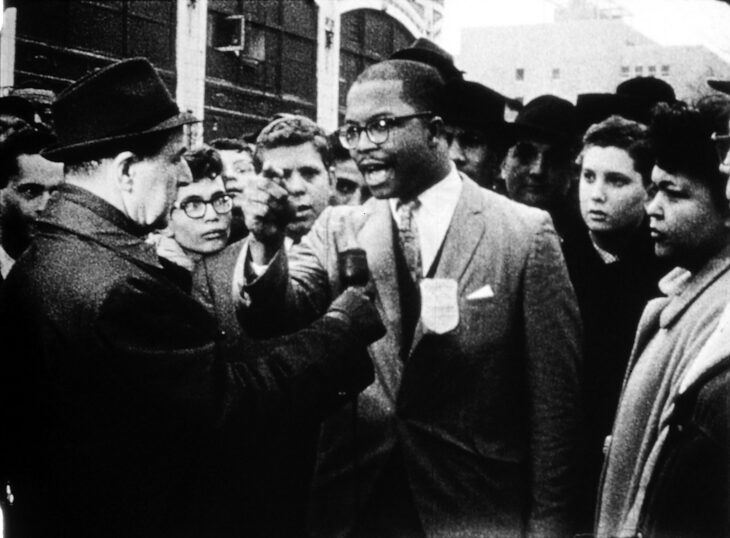
Serving as a meditation on what gets overlooked in the onslaught of news cycles, the cheekily named short presents a completely unedited discard from a newscast about Malcolm X’s assasination that Jacobs purchased for $5 on Canal Street.
Capitalism: Slavery (2006)
Dir. Ken Jacobs
3min; Digital
WARNING: This work contains throbbing light. Should not be viewed by individuals with epilepsy or seizure disorders.
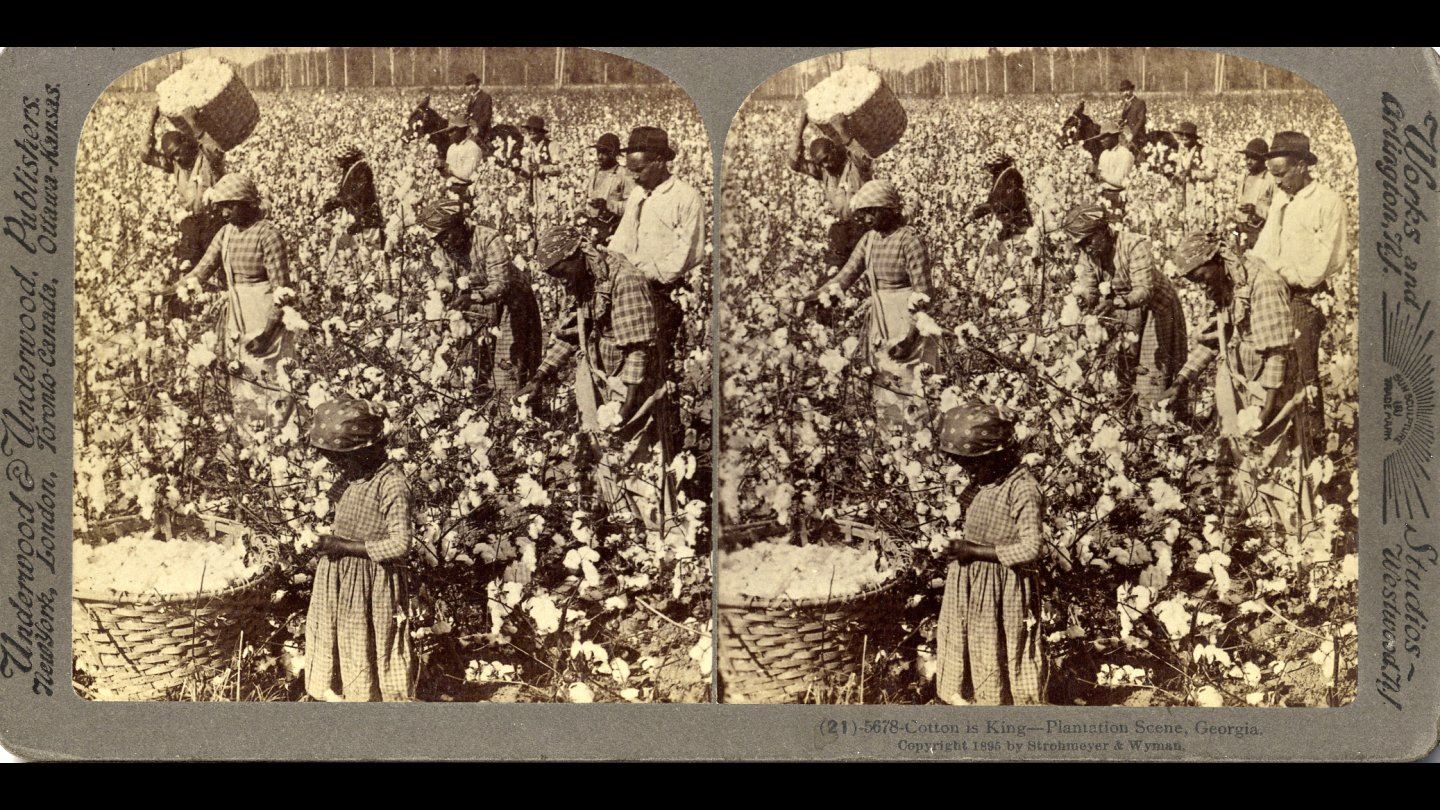
A stunning example of Jacob’s practice of found image manipulation in service of narrative construction, Capitalism: Slavery depicts a Victorian stereograph (a double-photograph) of slaves picking cotton under an overseer, digitally altered to create a haunting illusion of depth and movement. Described by Jacobs as "silent, mournful, brief,” the work reactivates a moment trapped in the stasis of its era’s technology.
What Happened on 23rd Street in 1901 (2009)
Dir. Ken Jacobs
14min; Digital
WARNING: This work contains throbbing light. Should not be viewed by individuals with epilepsy or seizure disorders.
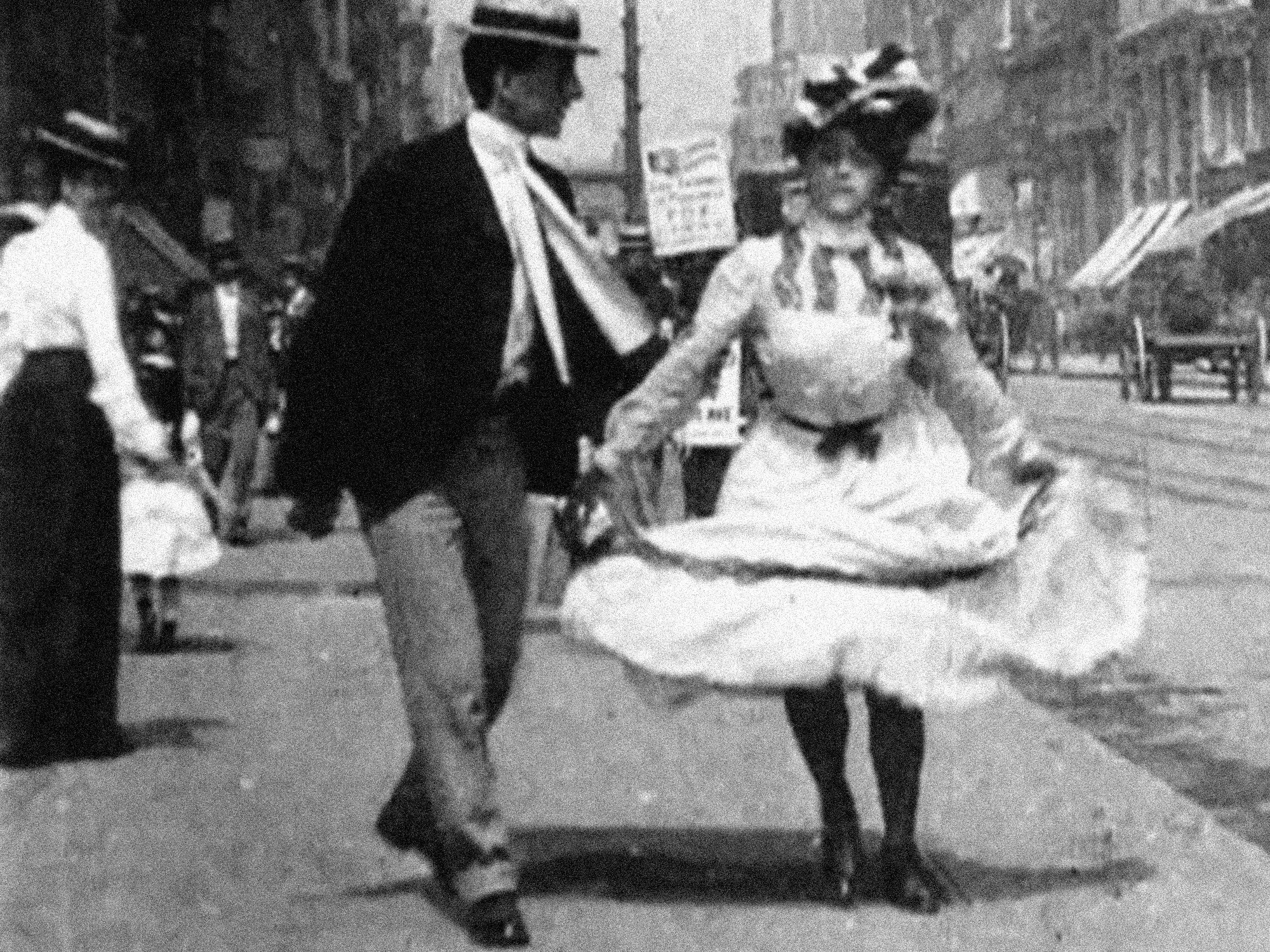
The century-old What Happened on Twenty-third Street, New York City was created by Edwin S. Porter, the director for Thomas Edison’s production company, advertised at the time as offering a glimpse of a "young lady's skirts suddenly raised to an almost unreasonable height, greatly to her horror and much to the amusement of the newsboys, bootblacks, and passersby." Subverting the audience’s desire built into the voyeuristic original, Jacobs’ riff on the 1901 movie instead stretches the film from its original 77 seconds to a drawn out 14 minutes, using a strobe effect (a Jacobs’ signature in his later work) to obscure the film’s most recognizable sequence.
Gift of Fire: Nineteen (Obscure) Frames That Changed The World (2008)
Dir. Ken Jacobs
28min; 3D Digital
3D Glasses will be provided
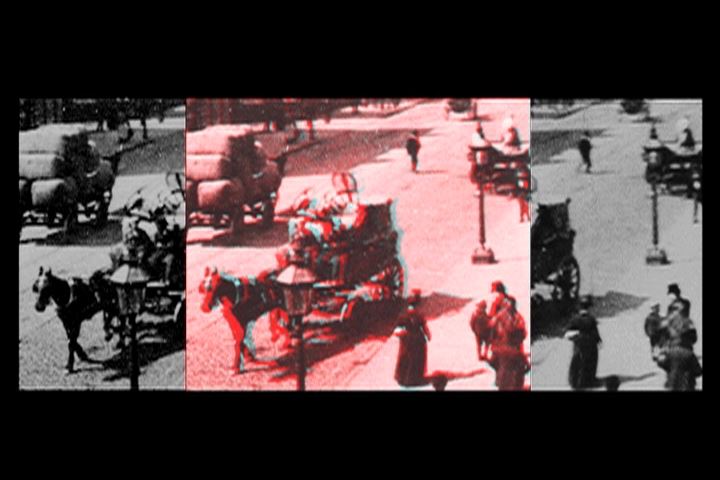
Jacobs returns to what is likely the first recorded film in history, Louis-Aimé-Augustin Le Prince's 1888 footage of traffic crossing Leeds Bridge, for this iteration of recontextualizing existing footage. Despite the original film’s mere nineteen frame runtime and mundane subject matter, Jacobs’ experimentation exalts the work’s monumental position in cinematic history by intercutting contextual text and other watershed film moments, such as the Odessa Steps sequence in Sergei Eisenstein's Battleship Potemkin.
Alongside his wife and artistic collaborator Flo, Jacobs produced work for over half a century, perhaps best-known for his 1969 experimental film Tom, Tom, the Piper's Son, an exploration of the techniques of early film that he would continue to work and rework for decades. . In this tribute, part of The Whole Shebang: Celebrating Ken & Flo Jacobs, a city-wide effort to honor his extraordinary career and legacy this month, BAM is honored to showcase some of the less-seen—but equally kinetic—work produced by Jacobs throughout the latter half of his career.
WARNING: This screening contains throbbing light. Should not be viewed by individuals with epilepsy or seizure disorders.
Perfect Film (1986)
Dir. Ken Jacobs
22min; Digital
Serving as a meditation on what gets overlooked in the onslaught of news cycles, the cheekily named short presents a completely unedited discard from a newscast about Malcolm X’s assasination that Jacobs purchased for $5 on Canal Street.
Capitalism: Slavery (2006)
Dir. Ken Jacobs
3min; Digital
WARNING: This work contains throbbing light. Should not be viewed by individuals with epilepsy or seizure disorders.
A stunning example of Jacob’s practice of found image manipulation in service of narrative construction, Capitalism: Slavery depicts a Victorian stereograph (a double-photograph) of slaves picking cotton under an overseer, digitally altered to create a haunting illusion of depth and movement. Described by Jacobs as "silent, mournful, brief,” the work reactivates a moment trapped in the stasis of its era’s technology.
What Happened on 23rd Street in 1901 (2009)
Dir. Ken Jacobs
14min; Digital
WARNING: This work contains throbbing light. Should not be viewed by individuals with epilepsy or seizure disorders.
The century-old What Happened on Twenty-third Street, New York City was created by Edwin S. Porter, the director for Thomas Edison’s production company, advertised at the time as offering a glimpse of a "young lady's skirts suddenly raised to an almost unreasonable height, greatly to her horror and much to the amusement of the newsboys, bootblacks, and passersby." Subverting the audience’s desire built into the voyeuristic original, Jacobs’ riff on the 1901 movie instead stretches the film from its original 77 seconds to a drawn out 14 minutes, using a strobe effect (a Jacobs’ signature in his later work) to obscure the film’s most recognizable sequence.
Gift of Fire: Nineteen (Obscure) Frames That Changed The World (2008)
Dir. Ken Jacobs
28min; 3D Digital
3D Glasses will be provided
Jacobs returns to what is likely the first recorded film in history, Louis-Aimé-Augustin Le Prince's 1888 footage of traffic crossing Leeds Bridge, for this iteration of recontextualizing existing footage. Despite the original film’s mere nineteen frame runtime and mundane subject matter, Jacobs’ experimentation exalts the work’s monumental position in cinematic history by intercutting contextual text and other watershed film moments, such as the Odessa Steps sequence in Sergei Eisenstein's Battleship Potemkin.
UPCOMING Screenings
RUNNING TIME
67min
VENUE
ACCESSIBILITY
WARNING: This screening contains throbbing light. Should not be viewed by individuals with epilepsy or seizure disorders.
TICKET INFORMATION
General Admission: $17
Members: $12
Please note: A $2 handling fee per ticket will be added to your order.
Leadership support for
BAM's strategic initiatives provided by the
Jerome L. Greene Foundation 
Leadership support for
BAM programming provided by
Leadership support for
BAM's strategic initiatives provided by 
Leadership support for
BAM Film provided by
The Thompson Family Foundation